Preprocessing videos
Filtering of frames with broken buffers (blocks of a frame)
Broken buffer detection methods:
Local Contrast Analysis
The
_detect_with_gradientfunction inframe_helper.pydetects noise in video frames by analyzing local contrast.second derivative in the horizontal direction (x-axis) is computed using
np.diff(block, n=2, axis=1), highlighting abrupt changes in pixel intensity across rowsmore effective for spotting localized discontinuities compard to only using first derivative
Computes the absolute mean of the second derivative for each row.
If the mean contrast exceeds the noise detection threshold (
config.threshold), the entire row is marked as noisybinary mask is generated where noisy rows are assigned a value of
1, indicating regions with broken buffers
Parameters:
current_frame (np.ndarray): The grayscale frame to process (2D NumPy array).
config (NoisePatchConfig): Configuration object containing the noise detection threshold.
Returns: Tuple[bool, np.ndarray]:
a boolean indicating whether the frame contains noise (
Trueif any row is marked noisy).a binary noise mask of the same shape as
current_frame, where noisy rows are set to1.
Example: If config.threshold is set to 5.0, any block with a mean second
derivative value greater than 5.0 is considered a broken buffer.
Types of buffer (blocks of a frame) errors
for a 200x200 pixel frame
1. Check-pattern
less than one row broken (<200 px)
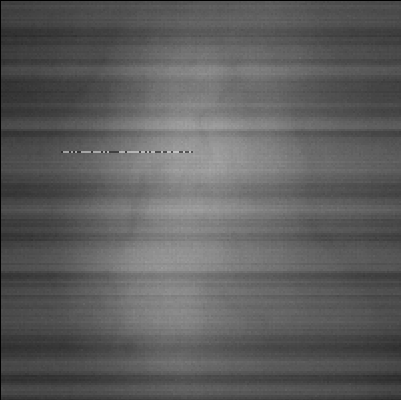
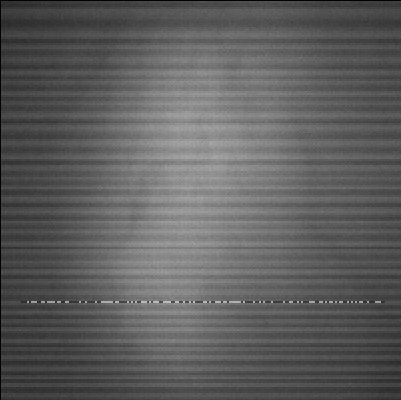
several rows broken (2-19 rows of pixels)
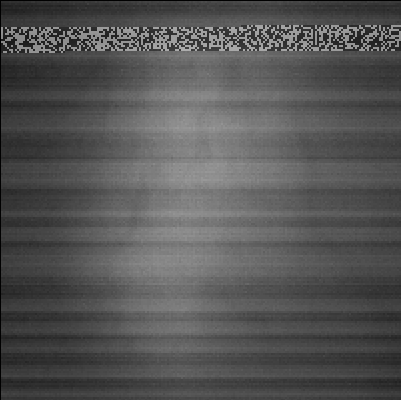
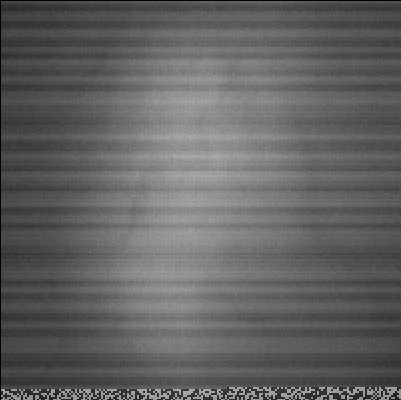
one block broken (>19 rows of pixels)
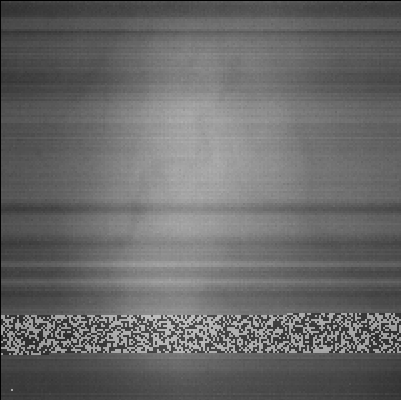

several blocks broken
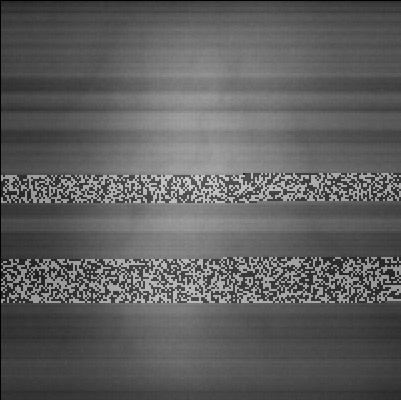
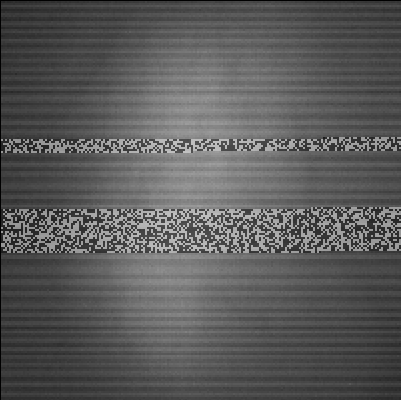
2. Black-out pattern
one block broken (1-25 rows of pixels black)
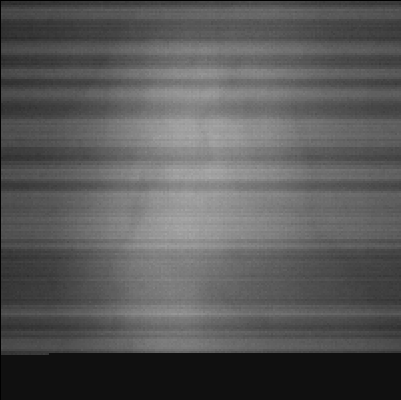
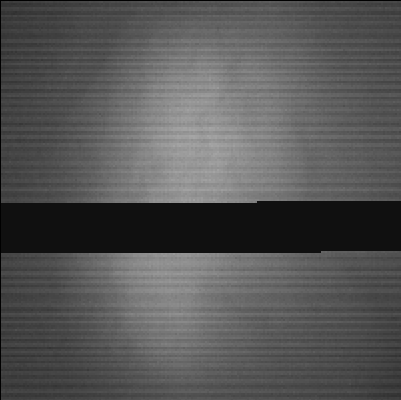
majority of frame broken (more than 25 rows of a frame are black)